Rann of Kutch Astro Tour | Feb 20-22, 2026
Rann of Kutch Astro Tour | Feb 20-22, 2026
Date Expired !
Overview
Why This Tour is Different
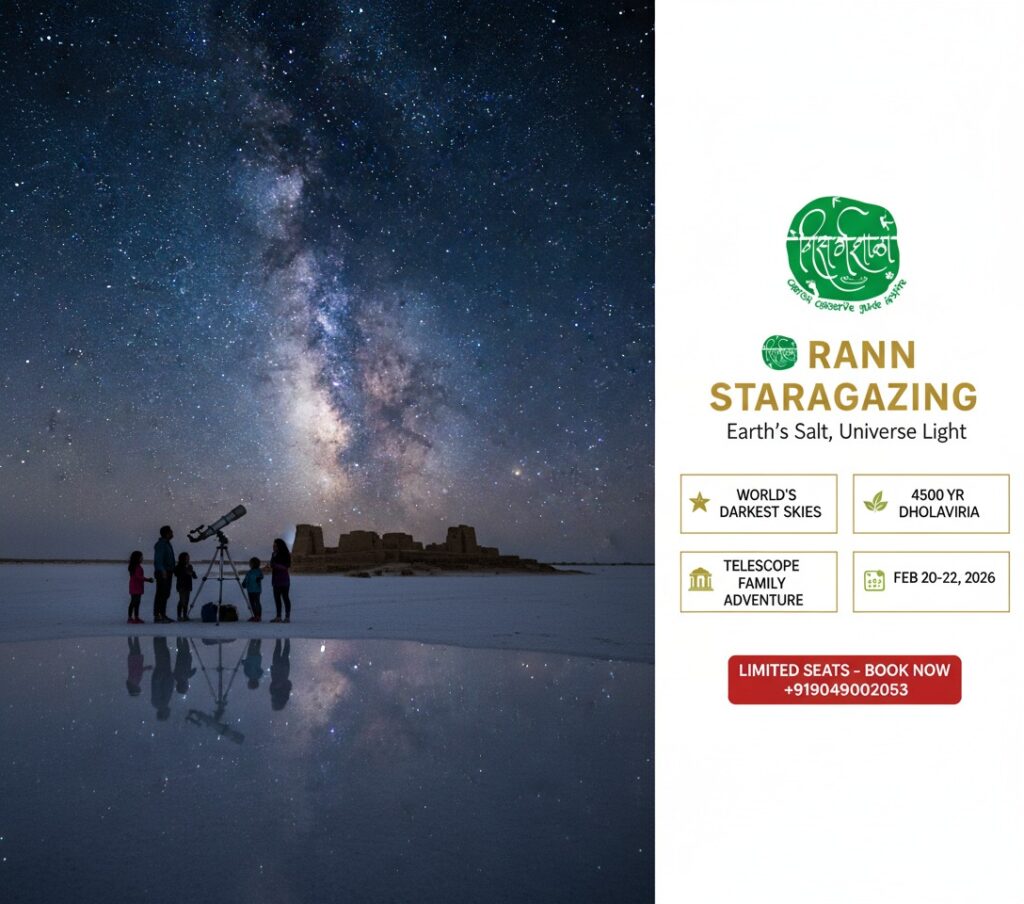
WORLD’S ONLY INVERTED SKY White salt flats mirror stars & Milky Way
4,500 YEAR OLD ASTRONOMY Walk Dholavira Harappan ruins by day, stargaze by night
COMMUNITY ECO-STAY Live with Hodka villagers in traditional Bhungas
Earth's Salt, Universe's Light: An Astronomical & Ecological Journey
The Nisargshala Rann of Kutch tour is a 2-night/3-day immersive experience that transforms the world’s largest salt desert into a classroom for astronomy, ecology, and indigenous knowledge systems. By staying in traditional eco-homestays, families become part of living communities while observing the night sky from one of Earth’s darkest, most visually distinctive locations. The white salt flats act as natural mirrors, reflecting stars and the Milky Way—a phenomenon unavailable at any other stargazing destination in India.
Core Philosophy
Stargazing is not passive observation. It is the gateway to understanding planetary systems, geological time, human culture, and our place in the cosmos. The Rann experience weaves astronomy with archaeology (Dholavira UNESCO site), ecology (salt farming sustainability), and cultural immersion (village homestays, traditional food, local crafts).
Why Rann of Kutch?
1. The Mirror Effect — Unmatched Visual Phenomenon
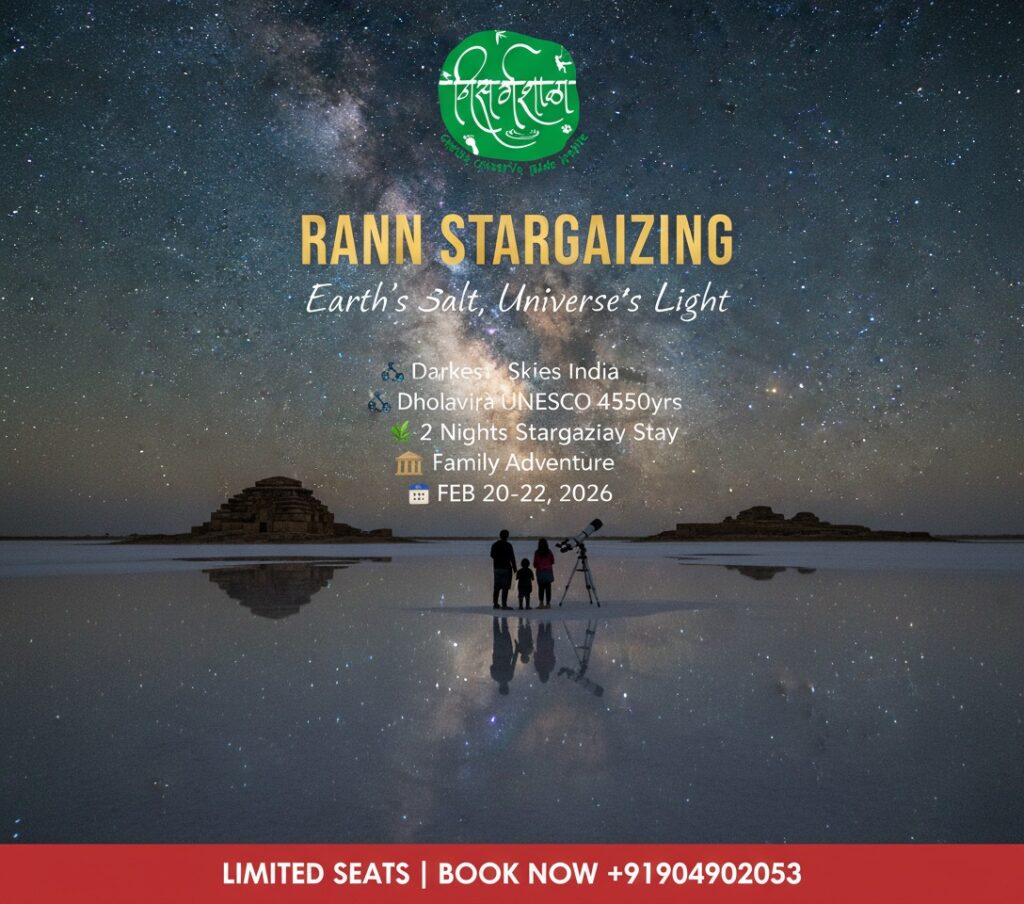
The vast white salt flats reflect stars and the Milky Way, creating an “inverted sky” effect. Families don’t just look up; they gaze down into an infinite cosmos mirrored below. This creates profound emotional and photographic moments unavailable at Sariska, Coorg, or other dark-sky sites. The reflection is most dramatic during full moon nights when the salt crystallizes under lunar light.
2. Archaeological Time Depth — 4,500-Year Educational Layer
The Dholavira Harappan site (UNESCO World Heritage, 2021) is located just 28 km from homestays. Families can physically walk through a 4,500-year-old Indus Valley Civilization settlement in the morning, then contemplate the cosmos at night. This juxtaposition—ancient human knowledge systems and modern astronomy—teaches children deep time perspective. The Indus civilization had sophisticated water management and possibly astronomical knowledge embedded in city planning.
3. Living Sustainability Education — Salt Farming Demonstration
The Rann is home to traditional salt farmers (Agariyas) who use sub-soil brine extraction—an ancient, ecologically sustainable method unchanged for centuries. Families can visit salt pans, meet workers, and understand how indigenous communities harvest natural resources with minimal environmental impact. This transforms stargazing into a values-based conversation about sustainability
Nisargshala & Its Stargazing Media Coverage


Get Enquiry
What's Included
- Accommodation
- Breakfast
- Dinner
- Guide
- Hotel Rent
- Lunch
- Outing Ticket
Activities
- Astrophotography
- Rural
- Stargazing