



Song of the Spring

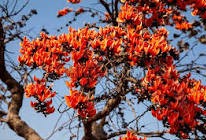
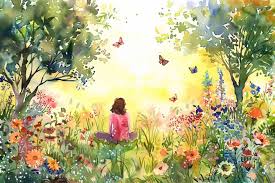
Now A Spring Sings
23 January 2026 – Vasantha Panchami — the beginning of the spring season ……
Emily Dickinson says of Spring
A Light exists in Spring
Not present in the Year
At any other period –
When March is scarcely here…
This is exactly the case –something that is not there in the year — is there when Spring Fever sets in. Nature smiles from the fresh blossoms, there is a frolicking ambience, feet dance, hearts reach out for the soft and the sensuous– Romance Blooms.
We continue our Indian education that was an aligned learning with RTU CHARYA (read rithucharya) “Seasonal Discipline “because Body, Mind and Environment were very closely connected to ensure better retention, health and equanimity. We also go into the classic treatment in Sanskrit by Mahakavi Kalidas:
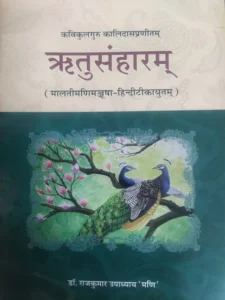
Rithusamhara-A garland of Seasons
प्रफुल्ल चूताङ्कुर मञ्जरीभिः
समुन्नमद्भिः सहकारशाखाः ।
Praphulla-cūtāṅkura-mañjarībhiḥ
samunnamadbhir saha-kāra-śākhāḥ
“The mango branches rise upward, adorned with clusters of newly blossoming buds.”
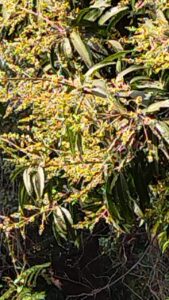
Mango blossoms at Panchvati Pashan, January 2026
Vasanth Rtu (Spring)
A period of renewal and vitality was utilised for expansive learning, providing focus to Veda and Vedangas, Literature (especially Kavyas), poetry, drama, Dhanurvidya, physical training, martial arts, and endurance, all supported by equanimity.
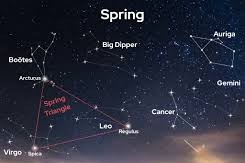
Simha Rashi — Zodiac Leo — very prominent; looks like a backward question mark. Has three prominent nakshatras: Magha (Regulus), Purvaphalguni (Chertan), Uttaraphalguni (Denebola). Distance from Magha (Regulus), one of the closest bright stars approximately 79 to 80 light-years away.

Kanya Rashi –Zodiac Virgo — home to the bright star Chitra (Spica). Chitra forms a core reference point in the aspect of astronomical referencing when “AYANAMSA”, the study of precession, is understood. It is a matter of pride and honour for us to realise that Indian Astronomers were among the earliest to recognise the Precession of the Earth. The constellation Virgo has star distribution varying from 50 light-years to more than 300 light-years away, but for basic understanding, Chitra (Spica) at about 250 to 262 light-years is taken.

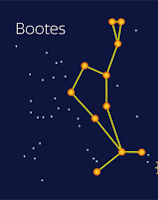
Bootes — contains the Swati nakshatra –Arcturus (alpha Bootis), one of the brightest stars in the sky. There is a straddle effect here as Tula (Libra) and Vrischika (Scorpius) try to overlap at some points, causing Vishak, which is a border nakshatra between Libra and Scorpius, traditionally associatedwith Alpha and Beta Librae. This is about 35 to 300 light-years away.
Karaka Rashi – Zodiac Cancer — the “Crab.” It is considered by skywatchers as a beautiful and artistic asterism because of one open star cluster, M44, called Praesepe or Beehive cluster – for us Indians, it is the Pushya Nakshatra Samooham (it is a star cluster). The constellation is not bright, having a distance of about 175 to 350 light years away, but Pushya Nakshatra is generally associated withthe Beehive cluster

When Spring comes knocking — the universe itself is stretching after winter. In the softer air and steadier nights, we do not merely observe stars — we enter a slow conversation with deep time.
Gurudev Rabindranath Tagore says
“प्रजापति मासे गेIणे न, मुहूर्ते गुणे।”
“आर तार जोतष्ठो समय आछे।”
“Prajapati Mase Goney na, Muhurta Goney
Aar Taar Jothoshto Samay Aachey”
“The Prajapati (Butterly in Bengali) counts not ‘months’ but ‘moments’ and has time enough”
Each glance through a telescope becomes a reminder: while seasons change below, the great cosmic story continues to unfold above, inviting us to pause, look up, and belong
We at Nisargshala would like to share this with you all….
Come to Nisargshala!!!
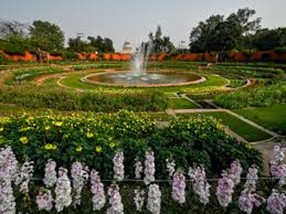
Spring at Rashtrapathi Bhavan, when the Mughal Gardens are opened to the public

Appa
Tales, Tails & Trails
Ram Iyer retired as the Project Director from the Science & Technology Park, an initiative of the Department of Science & Technology, Govt. of India, with a B.Tech. and an MBA from the University of Delhi. Getting Bharat, that is India, back to its roots through Ancient Vedic Wisdom and Science & Technologies is the mission he is on. Post-retirement, he actively supports Nisargshala’s mission, lending his scientific knowledge to nature-based education and stargazing initiatives
Amazing article and very poetically articulated Appa.
Thank you Hemant, coming from you these words mean a lot/
Appa,
Your words arrive like the very season you describe — softly luminous, learned, and deeply stirring.
From Emily Dickinson’s ineffable light of Spring to Kalidasa’s mango blossoms rising in quiet celebration, you weave poetry, rithu, and cosmos into a single living garland.
What moves me most is how seamlessly you remind us that Spring is not merely a change of weather, but a state of alignment — body, mind, learning, and sky in gentle harmony. The journey from Vasantha Ritu to the nakshatras, from Panchvati’s blossoms to Pushya’s celestial cluster, makes one feel both rooted to the earth and humbly placed in deep time.
And as Tagore so beautifully echoes — time is not counted in months, but in moments. Through your lens, Spring becomes such a moment: where renewal below mirrors eternity above, and we are invited not just to observe, but to belong.
Grateful, as always, to learn Spring not as a season — but as a song.
Yegnesh dear,
You write, but your words convey your state of the Heart….very deep
I have only a thank you to offer, and that is so meagre
I read this article on Vasantha Panchami and Vasant Ritu with deep admiration. It is a beautifully layered piece where poetry, tradition, astronomy, and lived Indian wisdom come together effortlessly. The opening with Emily Dickinson sets a gentle universal tone, while the seamless movement into Ritucharya, Kalidasa’s Ritusamhara, and the celestial mapping of rashis and nakshatras grounds the reader firmly in Bharatiya thought.
What stood out most was the way spring was presented—not merely as a season, but as a state of renewal that aligns body, mind, learning, and the cosmos. The integration of classical Sanskrit imagery, astronomical precision, and philosophical reflection creates a rare harmony between science and sensibility. The closing reflections, especially Gurudev Rabindranath Tagore’s words, leave the reader with a quiet sense of belonging to deep time.
This is not just an article—it is an invitation to pause, observe, and reconnect with nature and tradition in a thoughtful, celebratory way. A truly enriching and inspiring read.
Being…..is a Devine design of existing. The stillness, the silence, the scene & the serenity in the embrace of the greatest gift to mankind, nature.
Thanks Ram for the pearls of wisdom that flow like a placid river around us.