
Meet Your Heavenly Showers
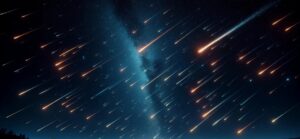
They spell fascination, they spell doom, they spell a visual delight, they spell mystery, whatever they do, they cast an indelible spell on you, these annual heavenly visitors, some coming from the edge of the known universe, but their sense of time discipline is something Man must learn
Welcome Oh! Heavenly Guest! How goes the world out there! How do you see the Earth today from up in the sky?
Bright visitor of night
you write your brief immortality
Upon the dark
A beauty born to perish
And therefore — dear
—–Appa
To our heavenly ambassadors, the comets, the meteors, the meteorites and a host of other heavenly visitors, this article is dedicated, as a simple scientific guide for curious minds.
Meteors, Meteorites, Meteoroids, Comets, Annual Meteor Showers, Asteroids, Fireballs, Bolides
What are meteors, meteorites, meteoroids and bolides
These words sound similar but mean different things.
Meteoroid -is a small rocky or metallic body moving through space. Sizes range from dust grains to small boulders.
Meteor -when a meteoroid enters Earth’s atmosphere at very high speed (10–75 km/s), friction heats the air and produces a streak of light — commonly called a shooting star.
Meteorite –If part of the meteoroid survives the journey and reaches the ground, it is called a meteorite. Most meteors burn up completely and never reach Earth.
Bolide — When a meteor is exceptionally bright and energetic, it explodes into a fireball or flares in Earth’s atmosphere is called a Bolide

Meteor
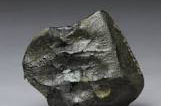
Meteorite
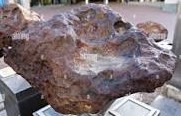
Meteoroid
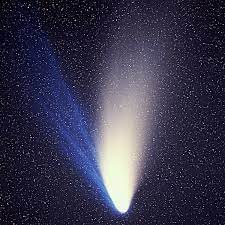
Comet
Orionids annual meteor shower
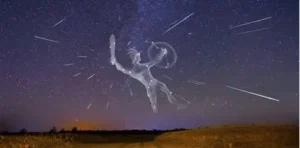
Leonids
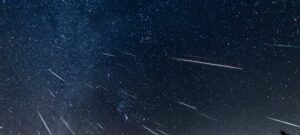
Geminids
Where do meteors come from?
There are two main known and accepted sources:
(a) Comets – the main source of meteor showers “The Comets” are icy bodies that orbit the Sun. As they approach the Sun. Ice sublimates (turns directly to gas without turning into liquid). Dust and rock are released. This debris forms a meteoroid stream as time passes. The comet leaves behind a long ribbon of particles along its orbit.
(b) Asteroids – source of many meteorites. Some meteoroids come from asteroid collisions in the asteroid belt. These are usually rocky or metallic and more likely to survive atmospheric entry.
Why do meteor showers happen every year?
Earth follows a fixed orbit around the Sun.
If Earth’s orbit crosses a meteoroid stream, then many meteors enter the atmosphere, they appear to radiate from one point in the sky — sometimes an asterism– sometimes a zodiac sign, this produces an annual meteor shower. Earth due to its rotation and revolution meets the same stream every year, and showers occur at roughly the same dates annually.
Major annual meteor showers (simple ready reckoner)
| S. No | Shower | Month | Origin/Parent body | Remarks |
| 1 | Quadrantids
| January
| Asteroid-like body (2003 EH1) | Short but intense, need a good weather and a clear sky for viewing, difficult in India |
| 2 | Lyrids | April | Comet Thatcher | One of the Earliest known to us |
| 3 | Eta Aquarids | May | Haileys Comet | The comet comes to us as a 76-yearly cyclic visitor; the Aquarids emerge from the comet’s flyby debris. The comet came to us in 1986, next time it will come in 2061 |
| 4 | Perseids | August | Comet Swift–Tuttle | Bright and popular, two astronomers, Tempel in 1865 and Tuttle in 1866, discovered this comet, which is a once-in-33-years visitor. Leonids are the debris that fly past. Perseids are difficult to see in India because Monsoon activity will be at its peak |
| 6 | Orionids | October | Halley’s Comet | High speed
|
| 7 | Leonids | November | Comet Tempel Tuttle | A good meteor storm gives a decent sighting |
| 8 | Geminids | December | Asteroid 3200 Phaeton | The Geminids are among the brightest showers, yet come from an asteroid, not a comet. One of the best sightings for us. |
Why do meteors glow?
Meteors glow due to air compression and heating, which leads to ionisation of atmospheric gases, and the material content of the meteor vaporises. They emit colours which are dependent upon the speed of fly-past, the content and its composition. The spectrum yield is the same as what we all studied in our chemistry labs while we were doing our chemistry practical, for example, Sodium → yellow, Iron → yellow-white. Nickel → green. Atmospheric oxygen → red
Meteorites are messengers from the early Solar System
Meteorites are scientifically valuable because they are older than Earth (4.5 billion years), they preserve early Solar System material, which helps us understand planet formation, and our own evolution through the ages. The main types are stony meteorites (most common). Iron meteorites (heavy, metallic), stony-iron meteorites (rare); some meteorites even contain organic molecules. It may be possible that this is a rare occurrence at the beginning of life on Earth, which made all of the possibilities possible.
Are meteors dangerous?
Most of the meteorite showers carry particles smaller than a grain of millet, and they burn up harmlessly. Large impacts are extremely rare, but have happened. Earth’s atmosphere is a strong protective shield. Large impacts (like the dinosaur extinction) occur on million-year timescales, not human timescales, but have happened
How to observe a meteor shower
Standard operating procedure at Nisargshala
- Wait for a Dark sky.
- Lie flat, look up.
- Give your eyes 25 to 35 minutes for your eyes to adapt.
- Best seen and experienced near the middle of the night.
- Try to avoid moonlit nights
No telescope. No binoculars. Just patience and belief in a heavenly order, something which we can still trust,
Why study meteors
Meteor studies help us track near-Earth objects (this is useful to determine if any unwanted collision is taking place and incorporate a planetary defence). Understand comet evolution and trace back the evolution history. Facilitate the study of atmospheric physics. Update knowledge and reconstruct Solar System history. Because of meteor, we can bridge astronomy, geology, physics, and chemistry. Meteor showers are Earth’s yearly encounter with ancient comet dust and a silent reminder of the billions of years that have gone by.
Comets
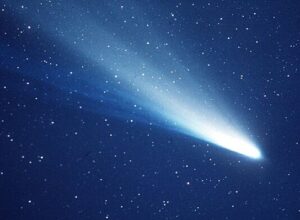
Haileys Comet
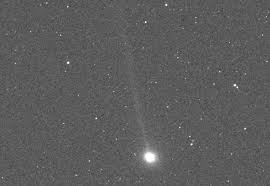
Comet 2 P Encke
Get ready to welcome him in 2026!!!
Comets are an icy, small Solar System body that revolves around the Sun. They can also be an interstellar object. When it comes close to the Sun, it warms and begins to release gases due to a process called outgassing. Due to outgassing, an extended, gravitationally unbound atmosphere called a COMA surrounds the nucleus, along with a tail of gas and dust that is blown out from the coma.
The effect is because of two reasons.
- Due to the effects of solar radiation.
- The out-streaming solar wind plasma acts upon the nucleus of the comet.
Comet nuclei range from a few hundred meters to tens of kilometres across and are composed of loose collections of ice, dust, and small rocky particles.
The coma may be up to 15 times Earth’s diameter, while the tail may stretch beyond one Astronomical Unit. AU (The Speed of Light (3 × 100000 kms/sec multiplied by 8 secs)(the time taken by light to travel from Sun to Earth).
When it is close and bright, a comet may be seen from Earth without the aid of a telescope and can subtend an arc of up to 30° (60 Moons) across the sky. Comets have been observed and recorded since ancient times by many cultures and religions.
| S.No | Comet Name | Periodicity years | Last seen | Next expected |
| 1 | 1-P Hailey | About 75 | 1986 | 2061 |
| 2 | 2-P Encke | About 3 to 4 | 2023 | 2026 |
| 3 | 105-P Swift Tuttle | About 130 to 135 | 1992 | 2126 |
| 4 | 153-P Ikeya Zhang | About 30 to 365 | 2002 | 2360 to 2365 |
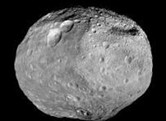
Asteroid
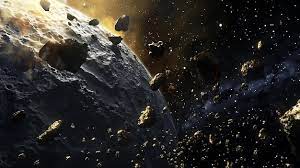
Asteroid Belt
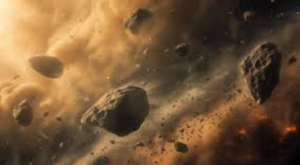
Asteroids
We can consider and call an asteroid a minor planet; it is larger than a meteoroid (that is, about 1 meter or larger). It is neither a planet nor an identified comet. It orbits within the inner Solar System or orbits around Jupiter and are Trojan asteroids. Asteroids are rocky, metallic, or icy bodies with no atmosphere, and are broadly classified into
C-type (carbonaceous) contains carbon, clay and silicate rocks
M-type (metallic), or contains metals, mainly nickel-iron
S-type (siliceous) contains mainly silica
The size and shape of asteroids vary significantly, ranging from small rubble piles under a kilometre across to Ceres. It is estimated that about one million asteroids are there, with the greatest number being located between the orbits of Mars and Jupiter, in a region known as the main asteroid belt. Asteroids have historically been observed from Earth. The Moon and Jupiter (In real terms, a Guru) protect us from these crashing into Earth
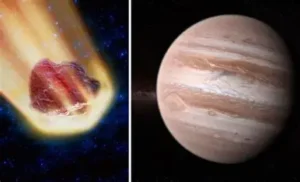
In 1992 the comet Shoemaker split and a large portion crashed into Jupiter…. Guru ….Brihaspathi ….protected us from extinction!!!!
Heavenly showers at Nisargshala
We at Nisargshala feel both joyous and proud for providing possibly one of the best sighting and star gazing options, backed by a wonderful array of qualified and knowledgeable star guides who are there just to enhance your experience and get Heaven’s Choicest Blessings.
Come to Nisargshala !!!
Silent Winter sky
A meteor learns the art
Of vanishing light
Wish made in a flash
By the time I look inward
The sky moves on
—-Appa

Appa
Tales, Tails & Trails
Ram Iyer retired as the Project Director from the Science & Technology Park, an initiative of the Department of Science & Technology, Govt. of India, with a B.Tech. and an MBA from the University of Delhi. Getting Bharat, that is India, back to its roots through Ancient Vedic Wisdom and Science & Technologies is the mission he is on. Post-retirement, he actively supports Nisargshala’s mission, lending his scientific knowledge to nature-based education and stargazing initiatives
great knowledge shared appa..
Knowledge has to be alwys shared , thank you for your ACKnowledge
very interesting incite about the meteors, meteoroids and asteroids. enjoyed reading
thank you Srilatha ji , looking forward to you seeing the stars in person
Excellent learning. Thanks.
Dr Ajanta When you say Ecellent Learning— I am only carrying Coals to Newcastle or as they say near home ULTEY BAANS BAREILY
An exceptionally enriching and beautifully articulated piece, Appa. 🌌
The seamless blending of science, poetry, philosophy, and ancient wisdom makes this not just an article, but an experience—one that inspires both awe and curiosity about our place in the cosmos.
Your ability to simplify complex astronomical phenomena while retaining their wonder is truly commendable. The structured guidance, scientific clarity, and lyrical reflections together reinforce why Nisargshala stands out as a space where learning meets reverence for nature.
Articles like this ignite the desire to step under a dark sky, look up, and reconnect—with the universe and with ourselves. Truly grateful for the knowledge shared and for the passion that continues to illuminate countless curious minds.
Looking forward to many such heavenly encounters at Nisargshala.
At the outset Yegnesh thank you very much for being so supportive and going through every post with a toothcomb
We appreciate your thoughts in every syllable and also look forward to your continued support
Looking beyond the obvious is mundane & common amongst the urban elite but seeing beyond the apparent brightness or darkness of the visible levels of atmosphere and pondering is the curious child in us.
Ram Iyer’s detailed yet simple trek puts many thinks in order. Specially the size of the Universe (Brahmaand)
which is so humbling. It would be a gross exaggeration to say that we are comparatively tiny. No we aren’t even in invisible microns. And yet every cell in each organism is a world unto each. Each intangible thought is a wonder of the creator, the ultimate architect, scientist and ever so enigmatic.
Regards,
PNN Iyer
The above article explains astronomical phenomena in clear, easy to understand language for the layman.
It gives us a unique perspective on humanity’s place in the universe. It motivates us to observe the sky with curiosity and instills a desire to understand some of the grandest and most beautiful phenomena in the universe.
The connect of ancient and modern astronomy , the legends and myths, that Appa transcends into seamlessly gives us a sense of perspective and helps us understand our own existence.
The blending of scientific wonder with emotional, artistic and philosophical interpretations of the cosmos through your poetry, Appa, is awe inspiring..
The images taken from Nisargashala are outstanding and act as a magnet, to visit Nisargashala more often.
I remember the famous quote on Astronomy ” Astronomy compels the soul to look upward, and leads us from this world to another”.