



Hemant & his 7 Sisters

Starry Starry Nights….
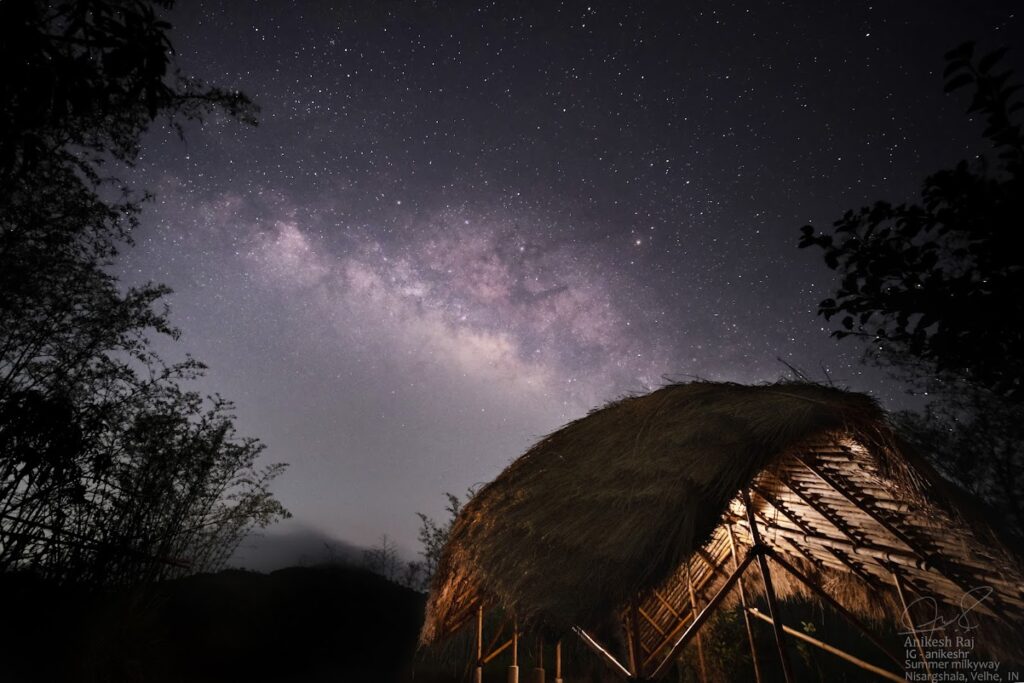
Starry Starry Nights! The stars stare down upon Hemant, as Hemant looks unto them. He has been at it for more than a dozen years, and every time he does so, the night skies always show up as a renewed option, a new story, a new mystery unfolded, a new burst of enthusiasm…Yes, we always travel many, many light-years away from the last sighting.
Is it not correct to say, when we see the Moon today and see it again at the same place, same time, tomorrow, we have travelled 57 million miles in cosmic space — ought not things to be different?
I am relatively new in “Starship Nisargshala”, and for me even the very mundane terrestrial action in the star gazing camps that complement the far away dominions, seem so ethereal–the patient setting up of the scopes, cameras levelled and resting on tripods, recharged batteries checked again, thorough peering on binoculars, support teams working at a clockwork pace, each one of them knowing what exactly has to be done, small short whispers as they go about their assigned tasks, while the others in the support team herd the flock of gazers to vantage, restful postures on soft rubber mats laid out on the gazing deck.
Starship Nisargshala!
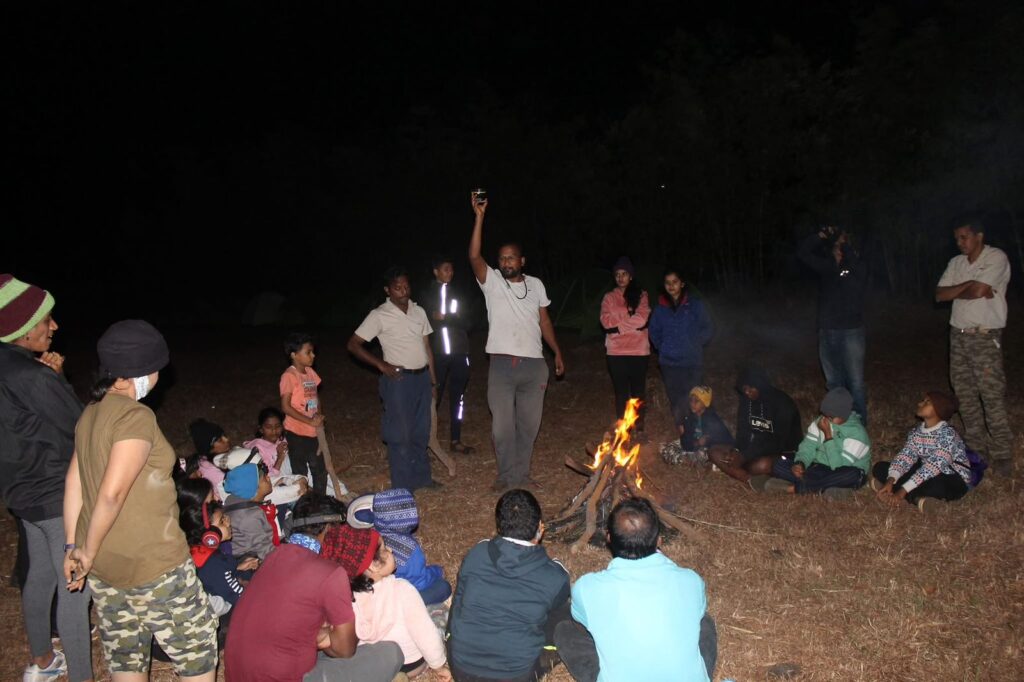
Hemant Vavale is the founder of Nisargshala, with a science background and over two decades of experience in nature education and camp management. He specialises in astronomy, outdoor learning, and experiential programs for children and families. Hemant designs innovative camps that blend hands-on science, environmental awareness, and digital education, making him a respected educator and coordinator.
“Switch off the torches!”
“Point them down!”
“Shut the cell phones!”
“No screen lights!”
Lie down and look up!”
“Your eyes will get adjusted!”
Budding Gazers!
Eagerness builds up, soon all is calm, all is quiet as Hemant stands up and surveys all around him and the skies
A shooting star whizzes past, or was it a meteor from Leo
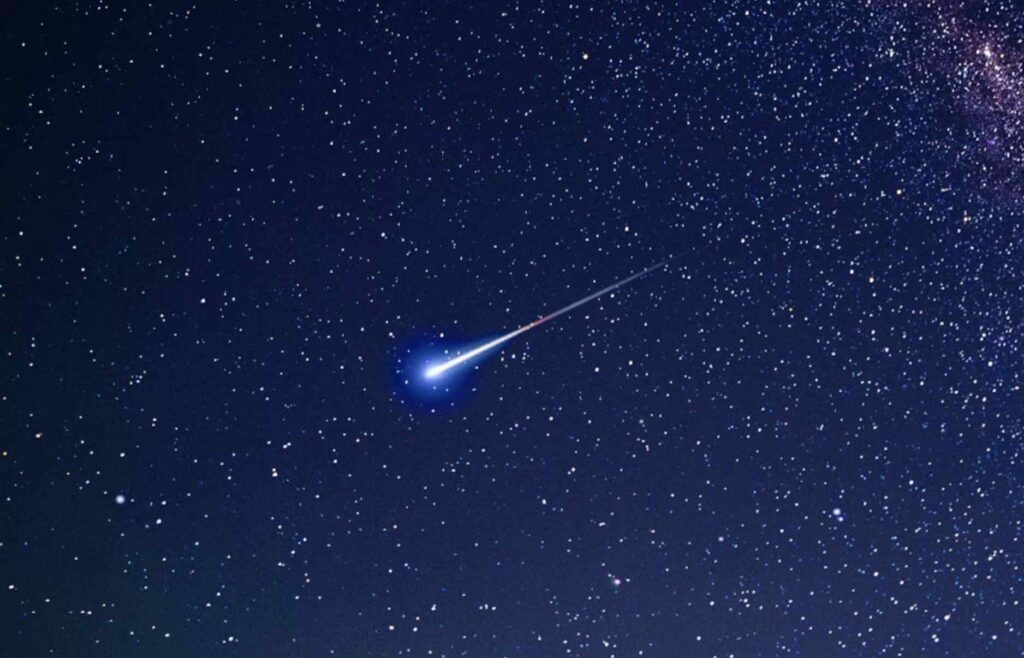
“AAAH!” “I saw that”, someone shouts, some joining in a chorus of emotive satisfaction, those who missed the sighting go “, Where?” “Where?”
“Look”! “Look!” “Look!”, “Where ?!” “Where?!” “Where?!” Heads turned in all possible directions, and confusion was rife.
A partially reticent voice from somewhere in the group — “Arey!” “That is a satellite!”
While all this is going on, a staid, stoic man stands up, straight back, quiet is the resolve, posture firm, unyielding, thoughts locked behind steady, unreadable eyes … A cool breeze blows across
Enter Hemant!
“Namaskar Mandali!” a stentorian voice …a pin dropped nearby, and a muffled sound is heard, everyone in rapt attention. Hemant switches on the laser torch and beams it at the night sky.
What follows is a pleasant discourse on the cosmos, its subtilities, its magnificence, its complexities, rendered with such an ease of understanding that even young boys and girls who have come to be a part of the stellar journey, grasp the essence, nodding and responding in comprehension
For Hemant, it’s a well-practised art form, as he constantly updates his knowledge and gives a very articulate presentation.
Cassiopeia gives space to a Pegasus who wants an attention before Perseus, Orion rises steadily, the belt, the triangle, the kite, the cotton floss lookalike called Andromeda…its is a thrilling ride across the countless as the continuous stars that shine and twinkle in the Milky Way … Greek names are soon taken over by Indian names –Ashwini, Bharani, Mrigashira, Rajhans, Rohini, Arudra….each given a short anecdote…
Soon the presentation falls into a steady rhythm, Hemant is in sync body and soul, the quiet resolve so evident until his face breaks into a radiant beam, a rare flash of warmth that transforms his stoic composure…The laser torch moves and sweeps across many light-years, coming to rest on….
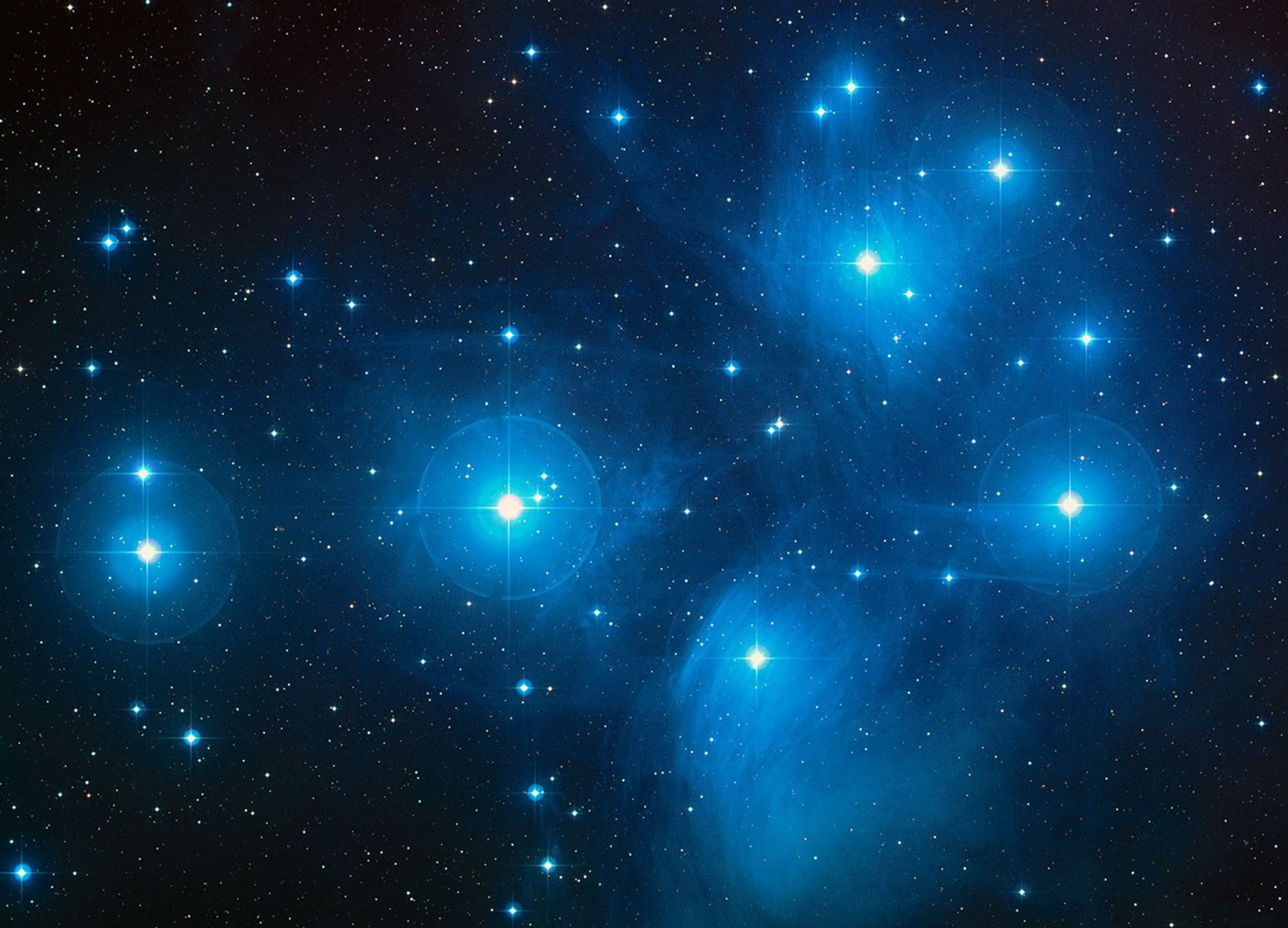
The Seven Sisters
While we can say without any loss of generality that all Stars and asterisms have their unique narratives, I somehow feel that the Seven Sisters hold a special place in Hemant’s consciousness. One can almost feel his loving touch, reaching out 440 million light-years away, yet touching me, touching you just a few meters away.
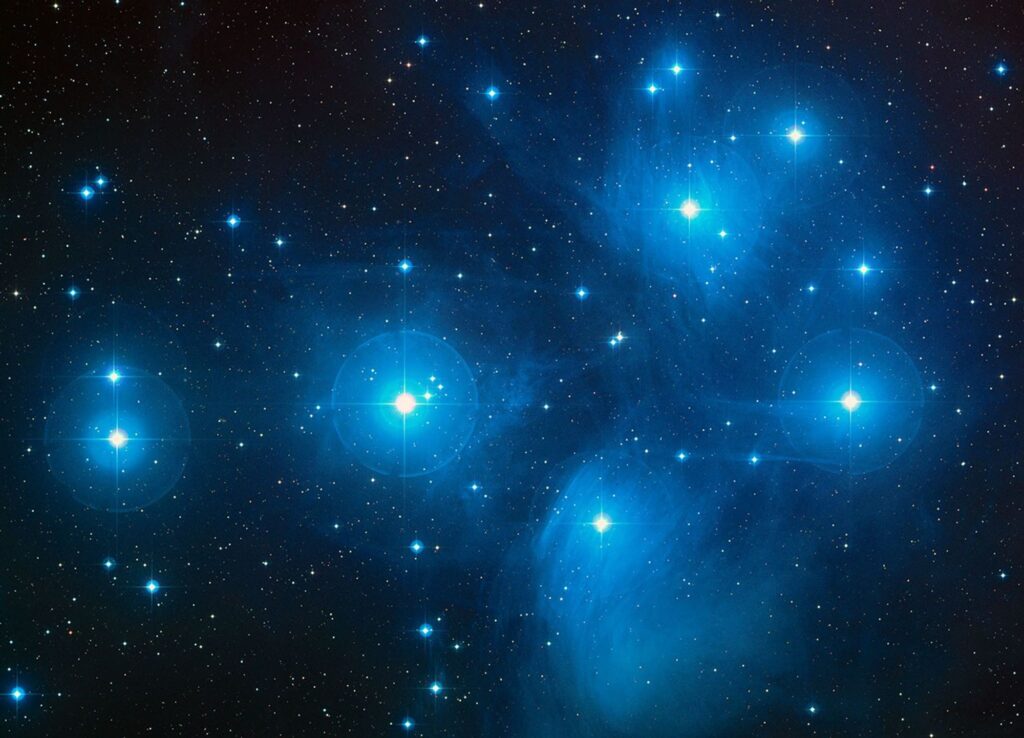
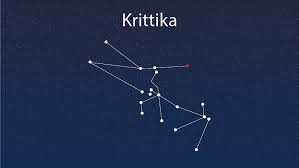
The Pleiades, called the star mansion (nakshatra) Kritika in Indian Astronomy, is often called the Seven Sisters. It is a prominent open star cluster located in the constellation Taurus. Visible to the naked eye, it was thought to contain hundreds of stars, though typically six to seven can be seen without a telescope. The cluster’s brightest stars—named for the mythological daughters of Atlas and Pleione—have been known since man first learnt to look at the stars and appear in the astronomy, mythology, and agriculture of cultures worldwide. The Pleiades are young, hot, blue stars surrounded by faint reflection nebulosity and lie roughly 440 light-years from Earth, making them one of the closest and most studied star clusters.
In Indian Astronomy, which follows the concept of quarters (or Padas), Kritika straddles between the zodiac sign of Aries (Mesh Rashi) in the last quarter (pada) and the zodiac sign of Taurus (Rishabh Rashi) first three quarters (Padas)
The science of star gazing is an evolving ocean of knowledge, concepts keep getting updated, understandings improved, bettered and renewed with each discovery or applied theories. In recent times, astronomers have critically changed the established knowledge of the Pleiades. Using data from NASA’s TESS (Transiting Exoplanet Survey Satellite) and studying closely various critical aspects within the Milky Way, the scientists now believe that the Pleiades is a continuum of more than 3,000 stars spreading in a beautiful dome across 1,900 light-years. Now called the Greater Pleiades Complex, it has tripled the number of stars associated with the Pleiades.
The 6 visible stars in the Kritika (Pleiades) cluster are generally considered to be the brightest ones, which have both astronomical designations and names derived from Greek mythology. The traditional Indian mythological names for the six “motherly representations of the stars are also available.
Most observers can easily see that these six prominent stars are
Alcyone (Eta Tauri)
Atlas (27 Tauri)
Electra (17 Tauri)
Maia (20 Tauri)
Merope (23 Tauri)
Taygetus (19 Tauri)
While the cluster is often called the “Seven Sisters,” the seventh star, Pleione (or sometimes Asterope), is a variable star and much dimmer, making it harder to see with the naked eye under normal conditions, which explains why six are often cited as clearly visible.
In Indian texts, the six celestial women (Krittikas) who took motherly care of the Lord Kartikeya, the commander-in-chief of the Deva Army (called Murugan in Tamizh), are
Śiva
Sambūti
Prīti
Sannati
Anasūya
Kṣamā
Most Indian myths propagate that the seventh mother is Arundhati nakshatra, that is a twin star with Vasishta in the Ursa Major (Sapta Rishi Mandala) ….
Come the month of Shravan generally falling around mid-July to mid-August (by the way another of Hemant’s star favorites is Shravan nakshatra called Aquila in the Makar Rashi –the zodiac sign Capricorn), girls, ladies of all ages would celebrate “Raksha Bandhan” ( Happy brothers day) — I am waiting eagerly for it as “Rakhees” (a brother-sister friendship band) would blissfully fall from heavens to fasten on the wrists of Hemant…. for a more prominent star gazing at Nisargshala.
Regards,
Appa, Nisargshala

Appa
Tales, Tails & Trails
Ram Iyer is a retired Project Director from the Science & Technology Park, an initiative of the Department of Sci & Technology, Govt. of India. With a B.Tech. and an MBA from the University of Delhi. Getting India back to its roots through Vedic Science & Technologies is the mission he is on. Post-retirement, he actively supports Nisargshala’s mission, lending his scientific knowledge to nature-based education and stargazing initiatives.
The essay that confluences both science & art with a dash of the mysticism of Vedic versions of the myriad galaxies runs the mind into a quest for more.
Those of us who retain a child-like curiosity for over seventy years are forever humble & eager learners. Gazing into the darkness of the night sky can indeed, be educative & meditative, under guidance from the stars of astronomy.
Ram Iyer’s starticulation makes one reach out to the stars & other celestial, like an Appa (father) leading a child into a forest trail, with tales of creatures with tails.
Nanu
Thank you Prof. Iyer, your words shall accelerate our deliveries of thought provoking knowledge share
The essay that confluences both science & art with a dash of the mysticism of Vedic versions of the myriad galaxies runs the mind into a quest for more.
Those of us who retain a child-like curiosity for over seventy years are forever humble & eager learners. Gazing into the darkness of the night sky can indeed, be educative & meditative, under guidance from the stars of astronomy.
Ram Iyer’s starticulation makes one reach out to the stars & other celestial, like an Appa (father) leading a child into a forest trail, with tales of creatures with tails.
Nanu
Thank you so much, Appa for the wonderful Write up.
Dear Hemant,
Veni, Vidi, Scripsi quae vidi..
(I came, I saw, I wrote what I saw)
Captivating to read, thank you for sharing this.
Beautifully narrated, thank you for sharing.
inspiring as always, in life and here with words.
Thank you Jaiesh, some value addition to young minds that’s all
Thank you so much, Shivaji ,your words are indeed encouraging
what an informative article Ram appa..This really enriched my knowledge base.You perfectly blend indian ancient Vedic knowledge and modern science.
This is so inspiring. I have often gazed at the sky and wondered about all the mysteries past and future it holds – and to read it in your blog where you marry that with mysticism and imaginative tales and science is very unique. Please keep writing.
Coming from you Arati , its I who should say that the comments are inspiring, Do please spread the word around for us
This article is a beautifully woven tapestry of science, storytelling, and quiet wonder. With poetic sensitivity and observational depth, it captures not only the vastness of the cosmos but also the human presence beneath it—Hemant emerging as a gentle bridge between stars and seekers. The narrative shines with lived experience, blending astronomy, mythology, and emotion into a night sky that lingers long after the reading ends.
Thank you sir for this encouragement