



Notice
Slow down enough to see what is usually missed.
A three-year-old can spend ten minutes watching an ant carry a piece of food.
A four-year-old may suddenly stop because a bird made an unfamiliar sound.
A five-year-old wants to know why leaves have different shapes.
A six-year-old collects stones as if each one were a treasure.
And a seven-year-old can turn a little patch of mud into an entire imaginary world.
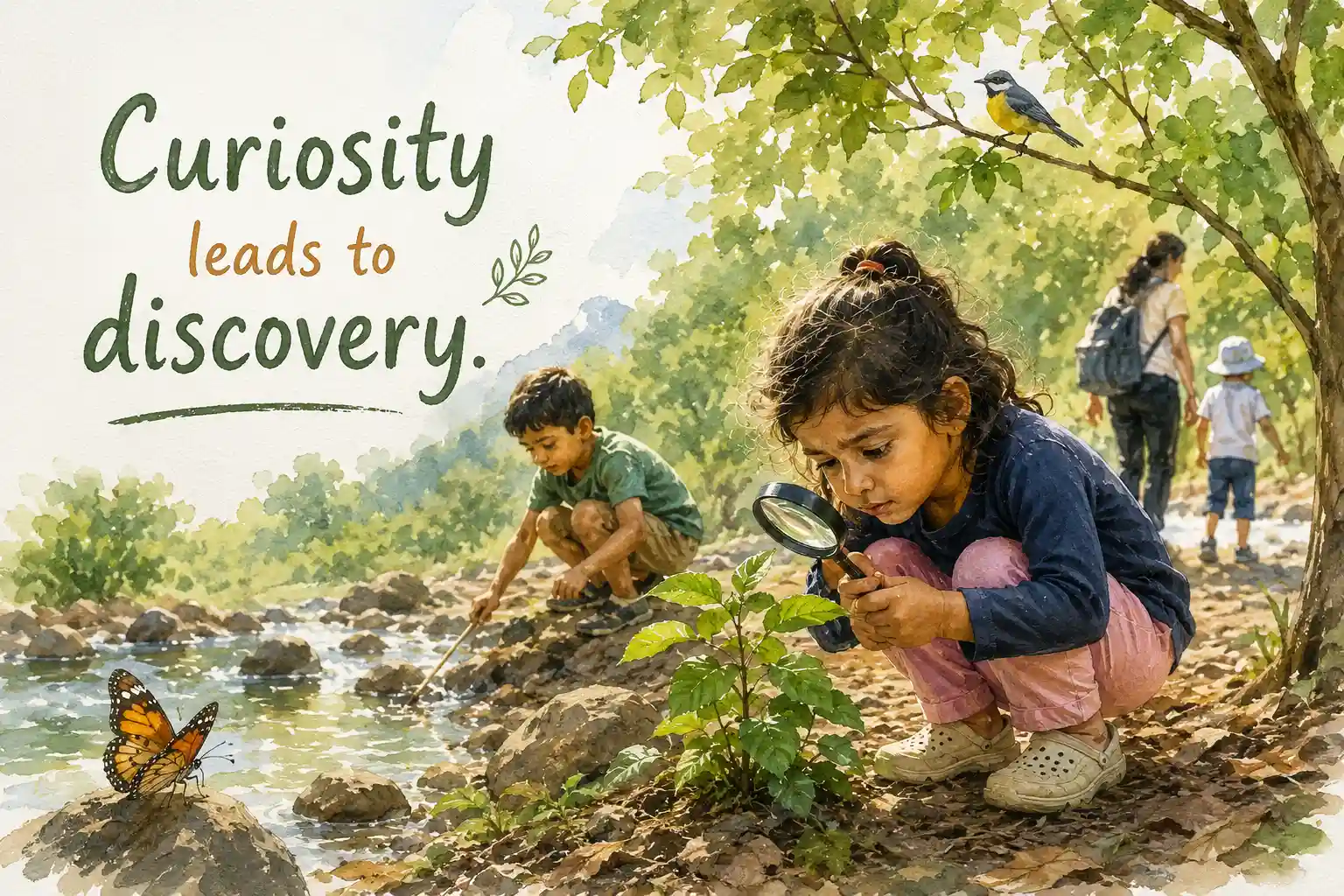
This is kutuhal — curiosity.
And perhaps one of the best places to nurture it is not inside a classroom, but outside it.
Screens often give children instant answers.
Nature does the opposite.
It gives them questions.
These questions may seem simple to an adult. For a child, they can be the beginning of discovery.
A forest, a stream, a rock or even a tiny insect can become an invitation to look closer.
Young children don't always need another lesson. Sometimes they simply need the opportunity to notice.
To touch the bark of a tree. To listen to birds. To watch an insect move through the grass. To feel mud between their fingers. To follow a trail without knowing exactly where it leads.
Nature is more than a backdrop for childhood adventures.
It is a living classroom.
They touch mud. They feel the texture of tree bark. They listen to birds. They watch insects move. They notice the smell of wet earth.
They splash in water, balance on stones, collect leaves, follow trails and stop suddenly when something catches their eye.
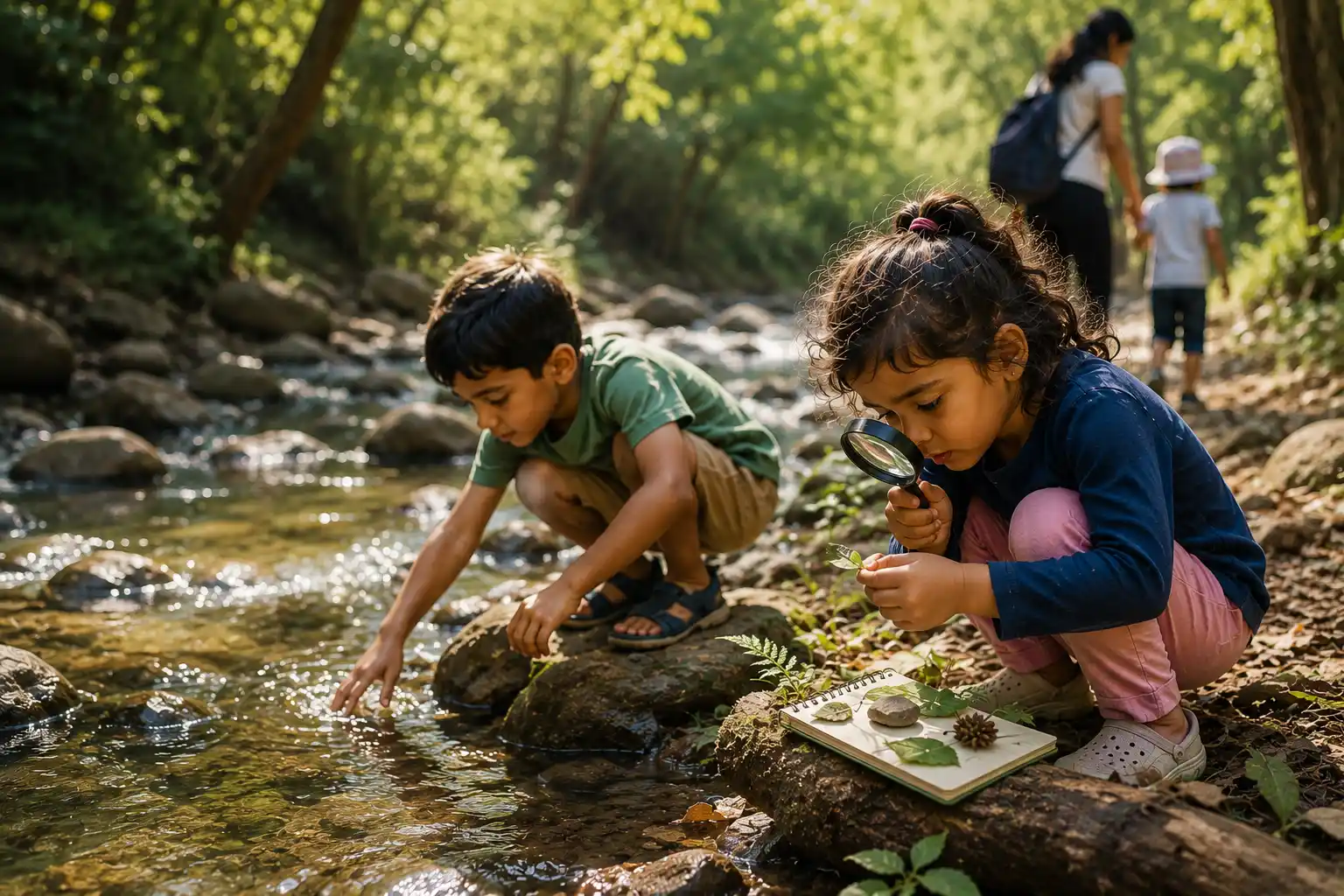
A forest gives children something a classroom often cannot: the freedom to learn through all their senses.
For a young child, a tree is not simply something to be identified from a picture.
It has rough bark. It has a smell. Its leaves move differently in the wind. Its shade feels different from the sunlight around it.
A stream is not just “water”. It has a current. It has slippery stones. It makes different sounds as it moves around rocks.
These small observations turn an ordinary outdoor experience into something much richer.
Slow down enough to see what is usually missed.
Touch, listen, move, observe and follow curiosity.
Let questions emerge naturally from the experience.
There is something special about discovering nature alongside your child.
A parent may notice the same bird, stone or butterfly — but see the experience differently through the child's eyes.
A simple walk can become a conversation. A strange sound can become a question. A night sky can become a shared story.
Kutuhal is therefore designed not simply as a camp for children, but as an experience that children and parents can discover together.
We don't want children to leave Kutuhal remembering a list of things they were taught.
We want them to remember what they discovered.
No account yet?
Create an Account