

Living Under a Shared Sky
Under the stars, man lifts his borrowed sight,
While rooted trees translate dark to breath,
The leaves time with sparks of ancient light,
Man learns his pulse from bark and stellar death,
And stands- brief bridge -between the soil and night
……Appa
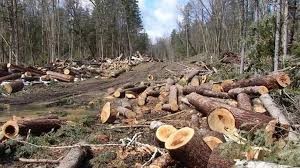
It is very personal to us here at Nisargshala when media personalities start to lecture us on saving trees and growing more trees — the very epitome of hypocrisy. While one does accept the bitter truth that there has been a steady decadence in our basic philosophy, owing mainly to the “western” ideology of rapid urban agglomeration, fueled by blatant consumption, to achieve which a huge industrial behemoth was necessitated….chopping trees for sheer vanity,
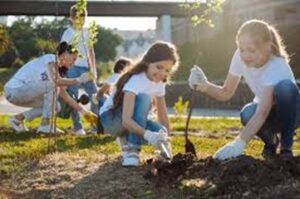
How they lecture us — paragons of virtue
Yes, this is our manifest truth today, while entropy is a justifiable cosmic clock event, Man’s unbridled race for “MORE” shall beat this clock to self-immolation. We have within us – “we Bharatiya”– owing to many thousands of years of upbringing and value systems, to spearhead the resurrection of the planet to become a planter. May the “KANTARAS” have many seasons … Long before conservation became a modern concern, Indian villages lived within an invisible map drawn between the sky and the soil.
The rishis observed that the moon’s journey through the 27 nakshatras was not only a celestial rhythm, but also a terrestrial one. Each nakshatra was paired with a tree, not symbolically alone, but experientially. These trees flowered, fruited, healed, shaded, and fed communities throughout the year. To know your birth star was also to know a tree you must never harm.
Long before conservation became a modern concern, Indian villages lived within an invisible map drawn between the sky and the soil.
The rishis observed that the moon’s journey through the 27 nakshatras was not only a celestial rhythm, but also a terrestrial one. Each nakshatra was paired with a tree, not symbolically alone, but experientially. These trees flowered, fruited, healed, shaded, and fed communities throughout the year. To know your birth star was also to know a tree you must never harm.
Sacred Groves
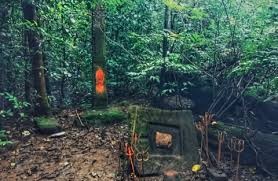
Deverais
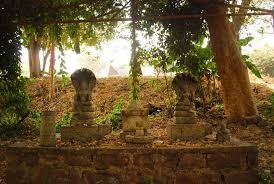
Kaavu
This wisdom did not remain in texts. It took root as practice. Sacred groves, known as Tapovana or Devaranya in ancient times, Devarai in Maharashtra, and Kaavu in Tamil regions and Kerala, were forests left untouched. No axe entered; no leaf was plucked without ritual need. These groves were believed to be the abode of village deities, serpents, and guardian spirits. Fear and reverence together became powerful protectors of biodiversityVedic Relevance
In the gurukul system, learning happened outdoors. A student learned astronomy by watching shadows, botany by touching bark, and ethics by restraint. Knowledge was not consumed; it was absorbed. Trees were elders, not resources.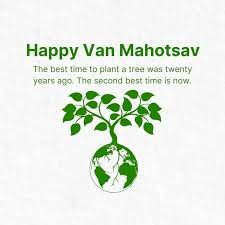 A shishya learnt early in life through the study, observation and experience that:
मा वृक्षं मा ओषधीं हिंसीः
MA VRUKSHAM MA AUSHADHIM HINSIH
Do not harm trees or plants
— Atharva Veda
न वा अरण्यानिर्हन्ति
NA VA ARAYANIRHANTI
The forest does not harm
— Rig Veda (Araṇyānī)
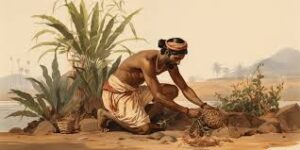 Village deities were often fierce, boundary keepers rather than benevolent gods. Their role was clear -To protect land, water, animals, and people from imbalance. Ecological collapse was seen as a spiritual disturbance. Today, when forests are reduced to numbers and carbon credits, this ancient wisdom whispers an alternative. What if protection arose not from ownership, but from belonging?
The stars still pass overhead. The trees still wait below. The question is whether we still remember how to listen. The ancients did not look at trees as mute resources. They were living markers beneath the sky, participants in a larger rhythm. Each Nakshatra was not only a star pattern but a reminder. A reminder that life below mirrors life above.
Village deities were often fierce, boundary keepers rather than benevolent gods. Their role was clear -To protect land, water, animals, and people from imbalance. Ecological collapse was seen as a spiritual disturbance. Today, when forests are reduced to numbers and carbon credits, this ancient wisdom whispers an alternative. What if protection arose not from ownership, but from belonging?
The stars still pass overhead. The trees still wait below. The question is whether we still remember how to listen. The ancients did not look at trees as mute resources. They were living markers beneath the sky, participants in a larger rhythm. Each Nakshatra was not only a star pattern but a reminder. A reminder that life below mirrors life above.
One of the Karmas of Life
That the human hand must move with restraint when the cosmos watches, to plant a tree was an act of alignment. To cut one was never casual. It required reason, ritual, and accountability. In villages, people knew which tree belonged to which star. Birth, marriage, learning, and mourning were all tied to these living presences. Like many of the karmas in our tradition from the womb to the tomb, planting a nakshatra tree was the custom. A child grew up knowing “this is my tree,” and therefore, “this is my responsibility.” Sustainability was not a policy. It was conducted. One did not harm a tree connected to one’s Nakshatra, just as one would not harm one’s own lineage. Protection was not enforced by fear, but by belonging. When humans remembered the sky, their actions on earth softened. When they forgot, forests became timber, stars became decorations, and time lost its rhythm. To live responsibly is to live as if watched by the stars and sheltered by the trees. Not by ownership but by Relationship.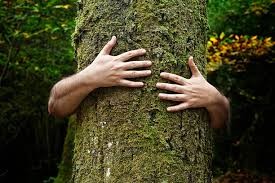 Atharva Veda 5.30.6 — Sanskrit (Tree protection context) One of the strongest Atharvan verses supporting ahimsa toward trees.
मा गामश्वं पुरुषं वधीरथो
मा वृक्षं मा ओषधीं हिंसीः ॥
Ma gām aśvaṁ puruṣaṁ vadhīr atho
mā vṛkṣaṁ mā oṣadhīṁ hiṁsī.
Do not injure cattle, horses, or humans;
do not harm trees, do not harm plants
Atharva Veda 5.30.6 — Sanskrit (Tree protection context) One of the strongest Atharvan verses supporting ahimsa toward trees.
मा गामश्वं पुरुषं वधीरथो
मा वृक्षं मा ओषधीं हिंसीः ॥
Ma gām aśvaṁ puruṣaṁ vadhīr atho
mā vṛkṣaṁ mā oṣadhīṁ hiṁsī.
Do not injure cattle, horses, or humans;
do not harm trees, do not harm plants
Quo Itis? O arbores ! (Where are you going? O trees !)
The tree is rooted. The star is distant. The human being walks, pauses, and looks up. We are neither fixed like the tree nor burning like the star. Yet we feel the pull of both — the need to belong, and the need to transcend. Perhaps the ancient question was never about destiny or astrology. Perhaps it was simpler: If the tree remembers the earth and the star remembers time. What does the human remember?